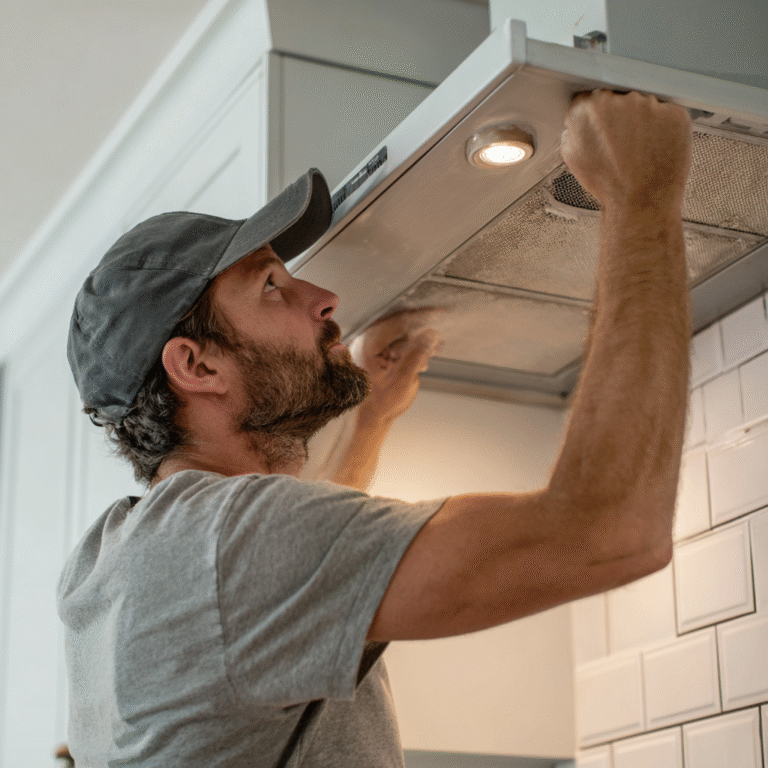
Who Can Install a Bathroom Exhaust Fan?
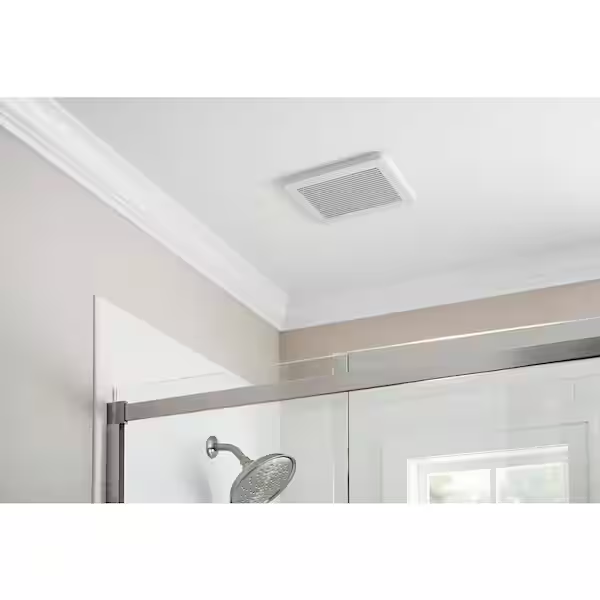
Installing a bathroom exhaust fan might seem straightforward, but choosing the right professional makes a big difference to how well the fan performs — and whether it actually protects your home from moisture, mould, and mildew.
So who should install a bathroom fan, and why does it matter? Here’s what you need to know.

Why Proper Installation Is So Important
Bathroom fans remove moisture from the air created by showers and baths. If that moist air isn’t vented outside, it can build up in your roof space and lead to:
- Mould and mildew growth
- Damp insulation
- Timber rot
- Reduced indoor air quality
- Long-term structural damage
A fan that vents into the roof cavity instead of outdoors can actually cause more problems than it solves.
Who Can Install a Bathroom Fan?
Bathroom fan installation can involve both electrical and plumbing work, depending on the setup of your home.
Electricians
Electricians are responsible for:
- Wiring the exhaust fan
- Connecting it to switches or timers
- Ensuring the electrical work is safe and compliant
However, electricians cannot perform roof penetrations or plumbing-related work in many situations.
Why a Plumber Is Often the Best Choice
If your home already has power available in the roof space, the best person to install your bathroom exhaust fan is often a licensed plumber.
That’s because plumbers can:
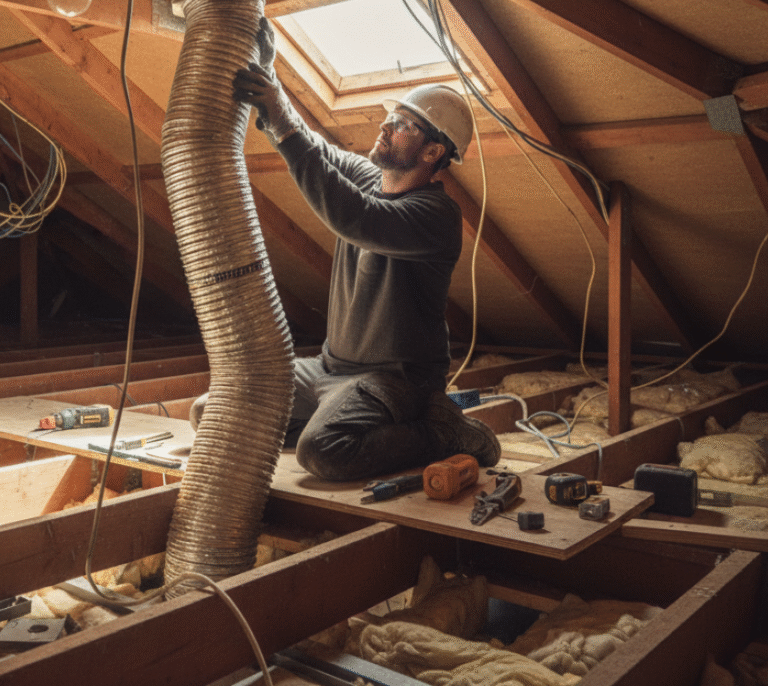
- Install and seal roof penetrations correctly
- Run ducting through the roof and vent it outside
- Ensure weatherproofing and flashing is done properly
- Prevent moisture being discharged into the roof cavity
This is critical for preventing mould and mildew in your roof space.
A plumber ensures the fan doesn’t just turn on — but actually does its job properly.
Roof Penetration: The Most Overlooked Step
One of the most common mistakes with bathroom fan installations is venting air into the roof space instead of outside.
A proper installation includes:
- Ducting run to an external vent or roof cowl
- Secure, sealed roof penetration
- Correct fall in the ducting to prevent condensation buildup
Plumbers are trained to handle these elements safely and compliantly.
When You May Need Both Trades
In some cases, both a plumber and an electrician may be required:
- If there is no existing power in the roof space
- If a new circuit or switch location is needed
In these situations, coordination between trades ensures the fan is installed correctly, safely, and efficiently.
The Bottom Line
If your bathroom already has power in the roof space, a plumber is often the best person to install your bathroom exhaust fan. They can handle the crucial roof penetration and ducting to ensure moist air is vented outside — not into your roof.
Correct installation protects your home from mould, mildew, and moisture damage, and helps keep your bathroom fresh, dry, and healthy.
When it comes to ventilation, it’s not just about installing a fan — it’s about installing it the right way.