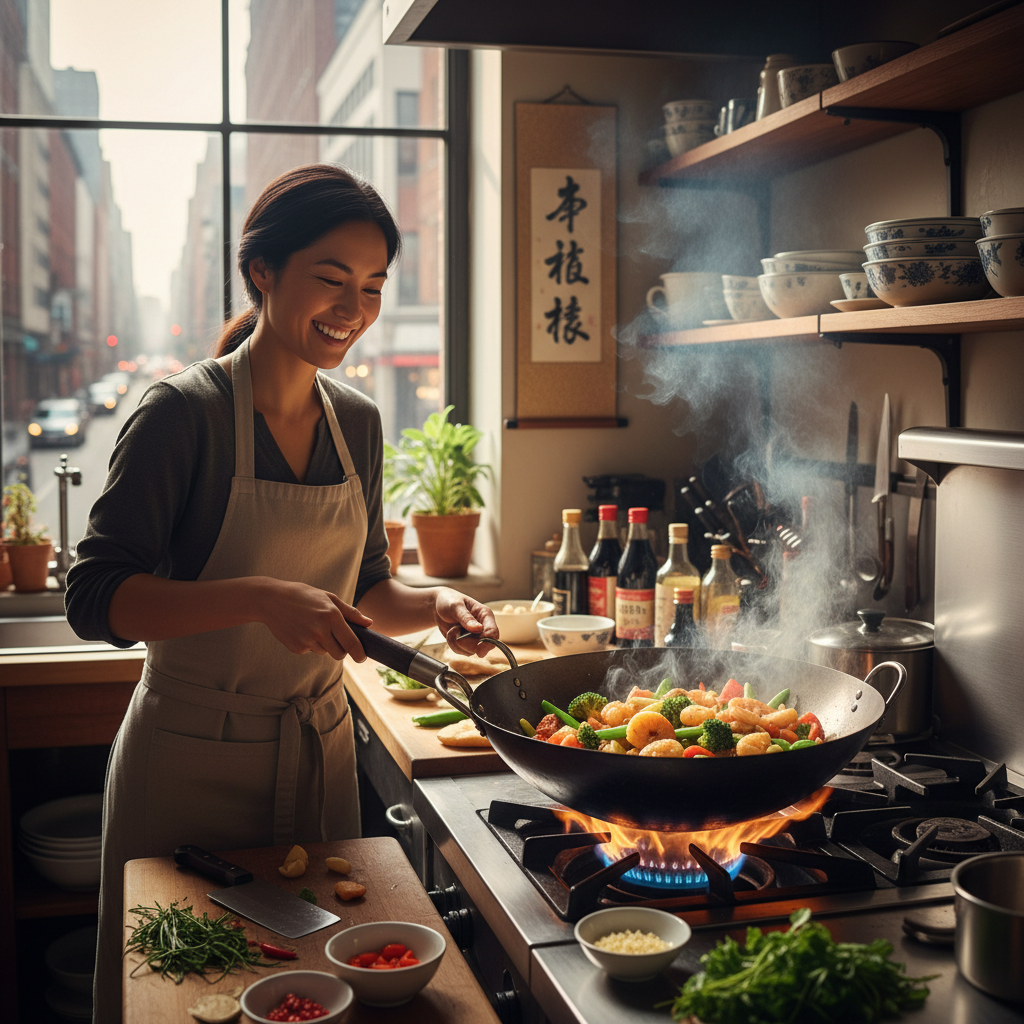
The Best Type of Rangehood for Asian-Style Cooking
What to Look For When You Cook with High Heat, Oil and Wok Hei
Asian cooking brings bold flavours, sizzling aromatics and intense heat. But it also produces far more smoke, oil vapour and steam than many other styles of cooking. That means choosing the right rangehood is essential—not just for comfort, but for keeping your kitchen clean and healthy.
If you regularly stir-fry, deep fry, or use a wok burner, here’s exactly what to look for.
🔥 1. Choose a Rangehood With High Airflow
For Asian cooking, airflow is the most important factor. The rangehood must be strong enough to pull up smoke and oil before it spreads through your home.
Recommended airflow (m³/hr):
- Light Asian cooking: 600–800 m³/hr
- Regular stir-frying: 900–1,200 m³/hr
- Heavy wok cooking / deep frying: 1,200–1,800+ m³/hr
If you use a wok burner or cook on high heat often, aim for the top end of this range.
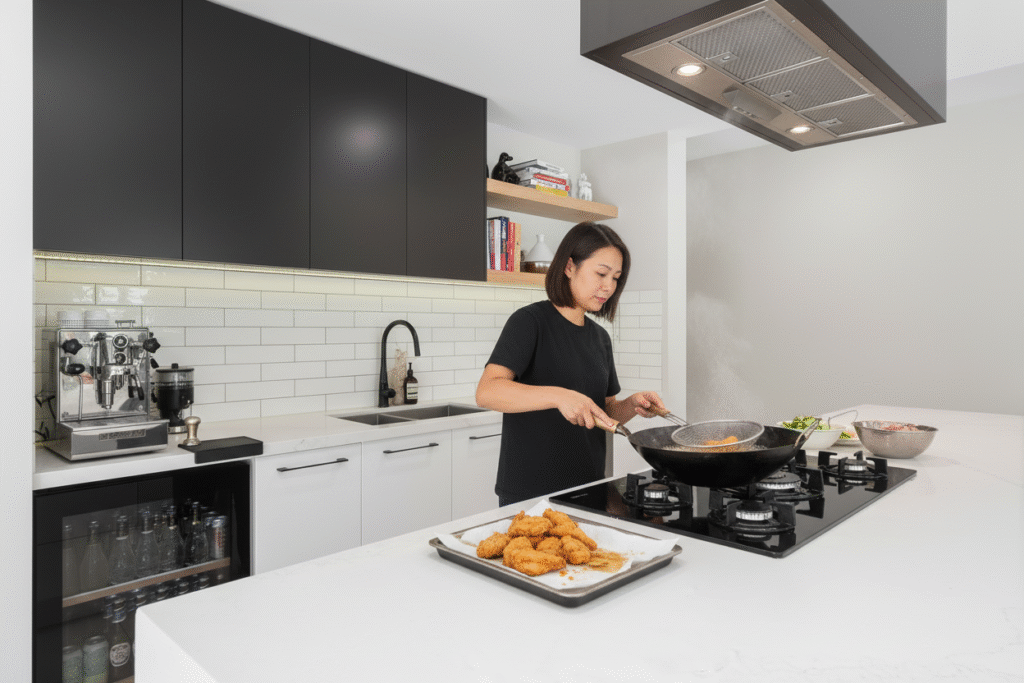
📏 2. Pick the Right Hood Style
Some styles are better suited to Asian cooking than others.
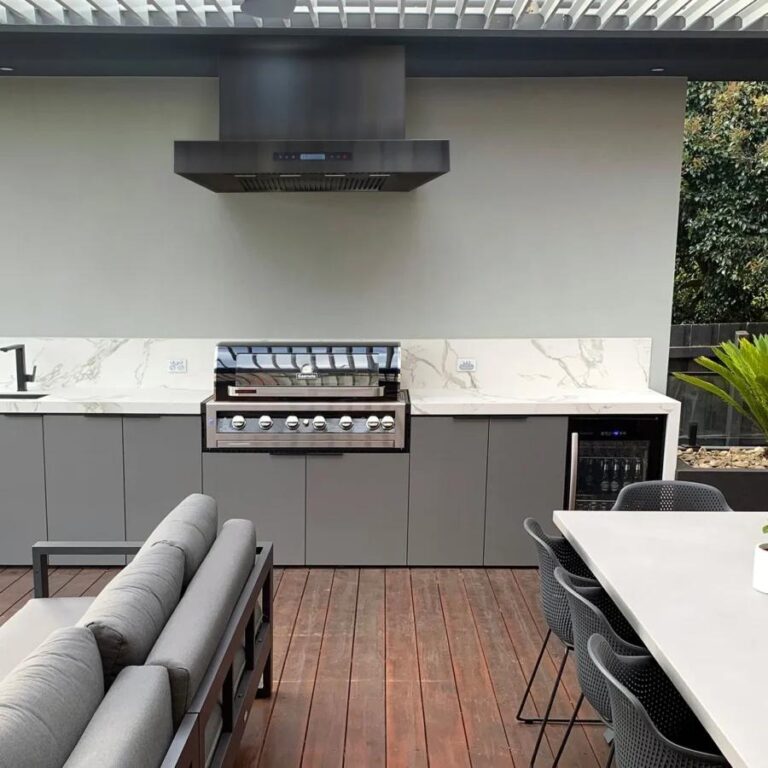
Canopy (Chimney) Rangehoods – Best for heavy cooking
- Deep capture area to trap rising smoke
- Usually offer the strongest airflow
- Ideal for wok cooking and deep frying
Under-mount / Undercabinet Rangehoods – Good if they are strong
- Compact and hidden in cabinetry
- Work well if airflow is high (1,000+ m³/hr)
- Require careful installation for proper coverage
Slide-out or Slimline Rangehoods – Not ideal for Asian cooking
- Shallow capture area
- Lower airflow
- Better suited to light cooking only
📐 3. Make Sure the Hood Matches Your Cooktop Size
Coverage is just as important as power.
- The rangehood should be at least the same width as your cooktop.
- For wok cooking, a rangehood 10–20 cm wider is even better.
- A deeper hood (front to back) captures more smoke and prevents escape.
If smoke escapes the edges, even a powerful motor won’t help.
🌀 4. Always Choose Ducted (If Possible)
For Asian cooking, there’s a big difference between:
Ducted Rangehoods
✔ Vents smoke, steam and odour outside
✔ Best performance for oily, smoky cooking
✔ Reduces lingering smells
Recirculating Rangehoods
✘ Filters and returns air back into the room
✘ Struggles with heavy smoke and oil
✘ Needs more cleaning and filter changes
If you’re in an apartment and ducting isn’t an option, choose the strongest recirculating hood you can and clean the filters often.
🧼 5. Choose Baffle Filters for Oily Cooking
For high-oil cooking like stir-fries and deep frying, baffle filters are best because:
- They handle grease more effectively
- Are fire-safe at high temperatures
- Are easier to wash
- Perform better over time compared to mesh filters
If you cook Asian food often, baffle filters will make a big difference.
🔇 6. Consider Noise Levels and Motor Placement
High airflow usually means more noise, but you can reduce this by:
- Choosing a hood with multiple speed settings
- Running it on a lower speed for prep / simmering
- Using maximum power only during high-heat wok cooking
- If available, opting for a model with a remote or external motor (quieter in the kitchen)
📌 Quick Summary: What’s Suitable for Asian Cooking?
To handle the demands of Asian cooking, your rangehood should have:
✔ Airflow of 1,000–1,800 m³/hr
✔ Canopy-style design (best smoke capture)
✔ Width equal to or greater than the cooktop
✔ Ducted installation preferred
✔ Baffle filters
✔ Deep capture cavity
These features will ensure your kitchen stays fresh, clean and free of stubborn oil residue.